Market Notes for May 23, 2026
You can read the email that went out to Henry’s Evanston Market Customers here.
You can sign up to receive the Market emails here.
If you already signed up but didn’t receive an email, it’s likely in your Promotions or Spam folder. When you find it, drag it back into your Primary folder, and ask that all future emails from us also go there.
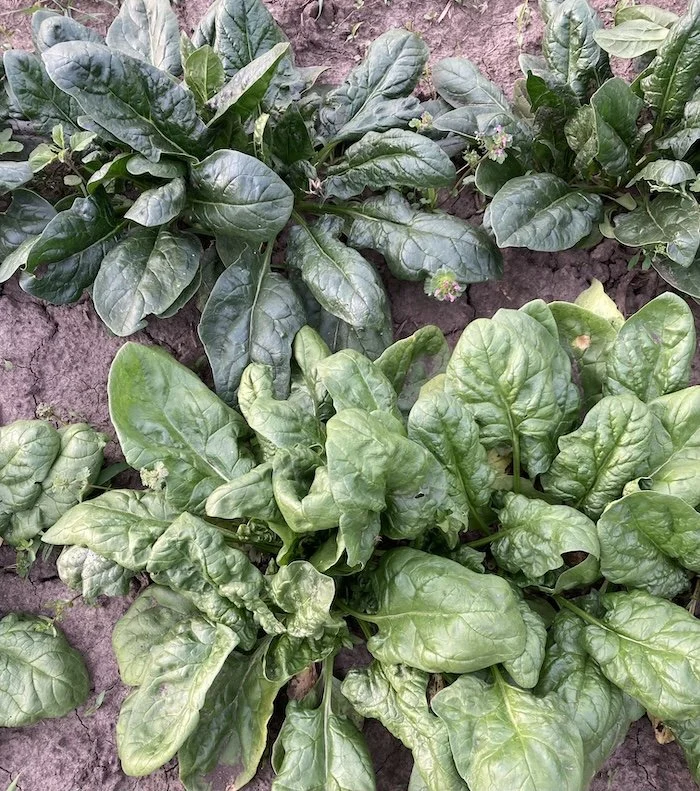
Read all about Henry’s 2 kinds of spinach below, and be sure to take advantage of his 2-bag deal to taste-test both kinds and decide which you like best!
The fields are looking good, and you’ll see a number of NEW things at Henry’s stand this week, including:
First Kale & Chard (from the field)
First Endive, Escarole, and Frisee to liven up your salads!
Also the first Lettuces from the field which are tastier and last longer in your fridge than the lettuces you’ve been getting so far from the hoophouse.

First Komatsuna & Mei Qing Choi (from the hoophouse)
And it’s a BIG Week for SPINACH because all of Henry’s early spring plantings have come to maturity at the same time! So look for Henry’s SPECIAL 2-bag price for the Spinach.
This week is a good time to stock up and freeze some for winter -- scroll down to the easy How-To Freeze Greens in the Food Notes below.
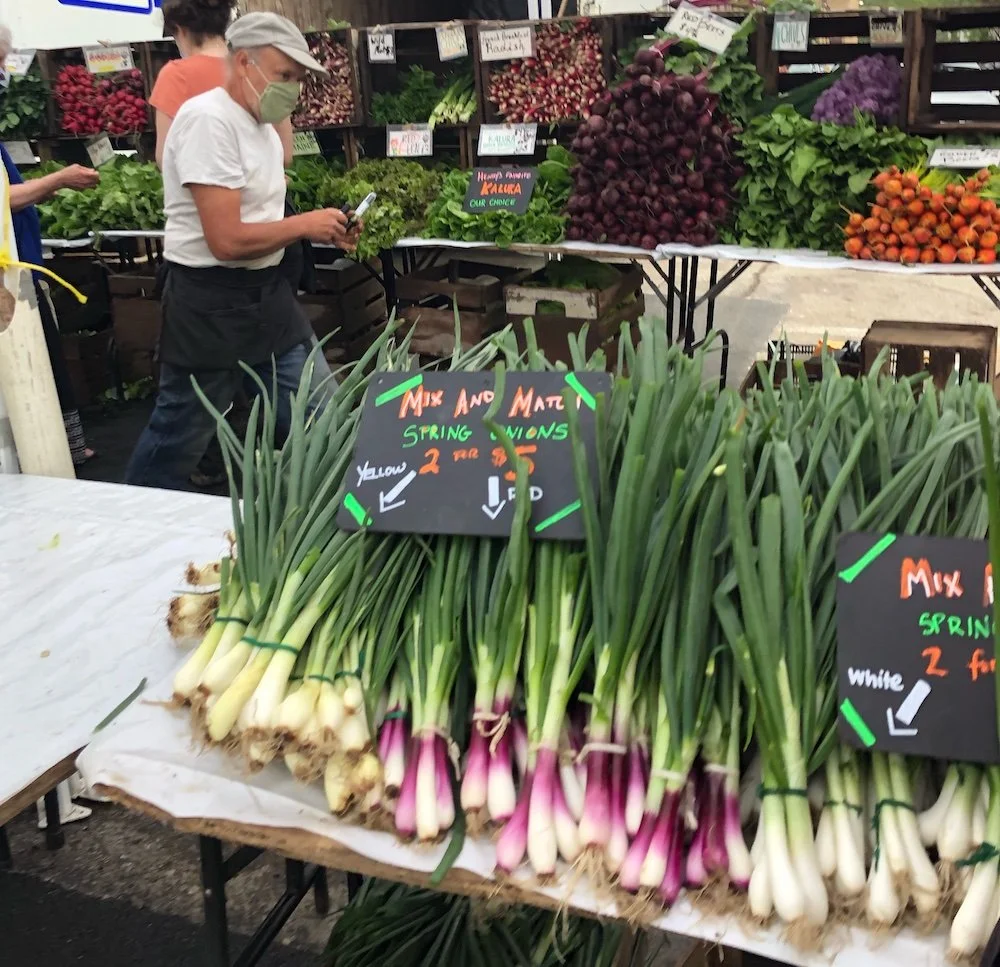
Henry's also got a lot more Alliums coming to market this week, including:
—> Green Garlic (German Extra Hardy with big stems and swelling bulbs — really nice!)
—> Spring Onions of all varieties
—> Spring Shallots, which are like spring onions except milder, sweeter, and juicier. Henry says be sure to take some home this week!
Other not-to-miss vegetables this week
For your beautiful rainbow salads:
Purple Dragon Carrots
Orange Carrots
Rainbow Carrot
Red Beets
Golden Beets
Mint
Dill
Cilantro
Lamb's Quarters (aka Wild Spinach)
Sorrel
Chives
Spring Onions (all varieties)
Green Garlic (the nice big German Extra Hardy variety)
Green Shallots (like Green Onions but better!)
Food Notes: Henry’s Two Kinds of Spinach
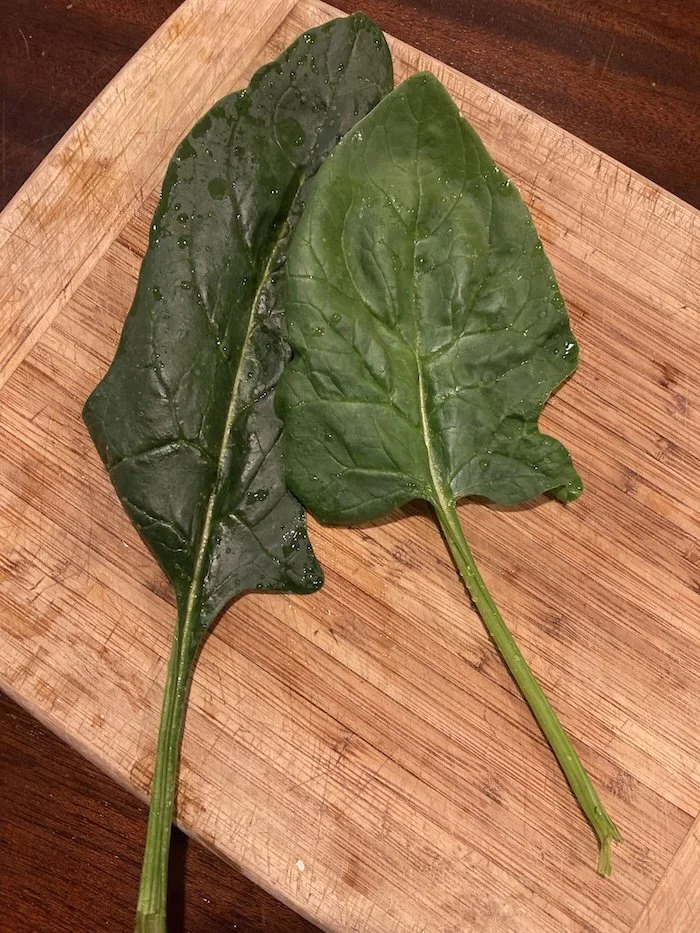
Amador Spinach (left) is an Asian type of spinach favored by Japanese, Chinese, and Korean people. The smooth green-black leaves are arrow-shaped and grows more upright than other spinach varieties. The nice long stem is very tender and sweet and the most-prized part of the plant. This variety has a deeper more robust taste than regular spinach.
The “regular” varieties of spinach that Henry grows (right) are a lighter green, and with a milder, lightly “grassy” flavor. The traditional savoyed leaves are broader and grow closer to the ground than the Amador leaves.
Both varieties are very tasty, quite sweet, and have a fairly short season, so now is the time to enjoy them AND to freeze some to enjoy later!
How to Freeze Spinach (or Lamb’s Quarters, or pretty much any green!)
Here's how to prep and freeze spinach. (Use the same process for Lambs Quarters, but strip the leaves from the lower part of the stems first.)
Wash the spinach.
Bring a large pot of salted water to a boil.
Fill a large bowl with cold water (or ice water) and set near the stove.
Drop large handfuls of spinach into the boiling water, giving a good stir to fully submerge the leaves. Cook until all the spinach is bright green, about 2 minutes.
Scoop the spinach out and dunk into the cold water. When cool, remove the spinach and squeeze lightly. Transfer to a large bowl.
Repeat the steps above until all the spinach is cooked and cooled.
Then fill your containers or freezer bags with spinach, and you're set for many delicious, nutritious meals in the months ahead!
Farm Notes: Lookin’ Good!
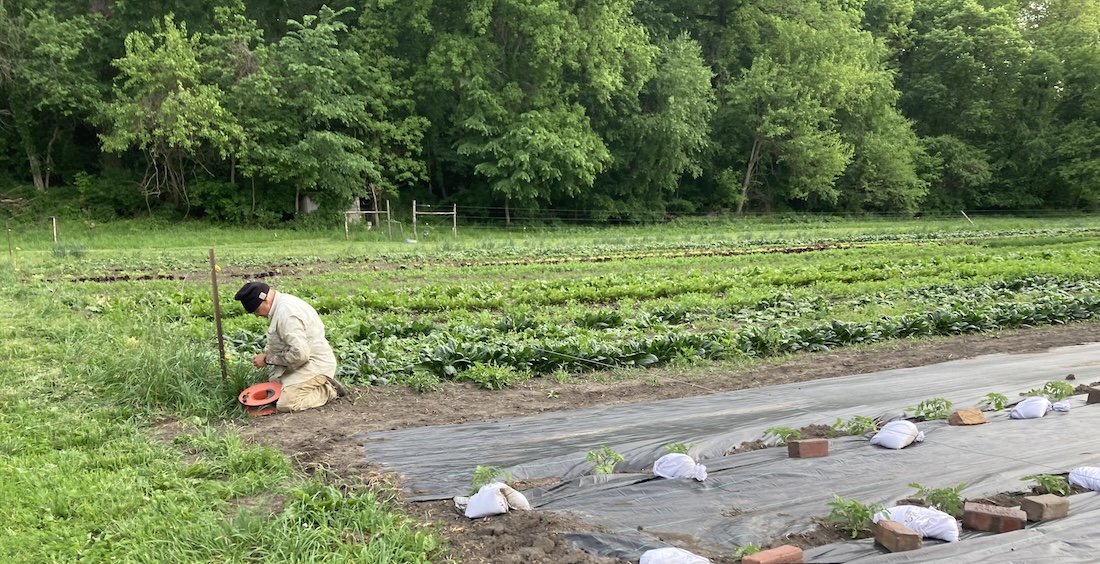
With the lengthening days as we near the summer solstice, Henry gets 2 or 3 more hours of daylight to work after the farm hands go home to eat and rest. Today he was down in the bottom land fields making and repairing the electric fences that keep the deer from eating up all your spinach and lettuce. It is a continual battle, with the deer routinely running trying to jump over or run the fence for a gourmet meal.
We also got a lot of summer crops transplanted from the hoophouse into the field, including the tomatoes in the foreground. Henry planted them into a part of the field that has Canada thistle, so he covered the ground with tarps, which we hope will kill the thistles.
All in all, things are looking good so far this season!
