CSA #8 (7/14/26)
In Your Share This Week
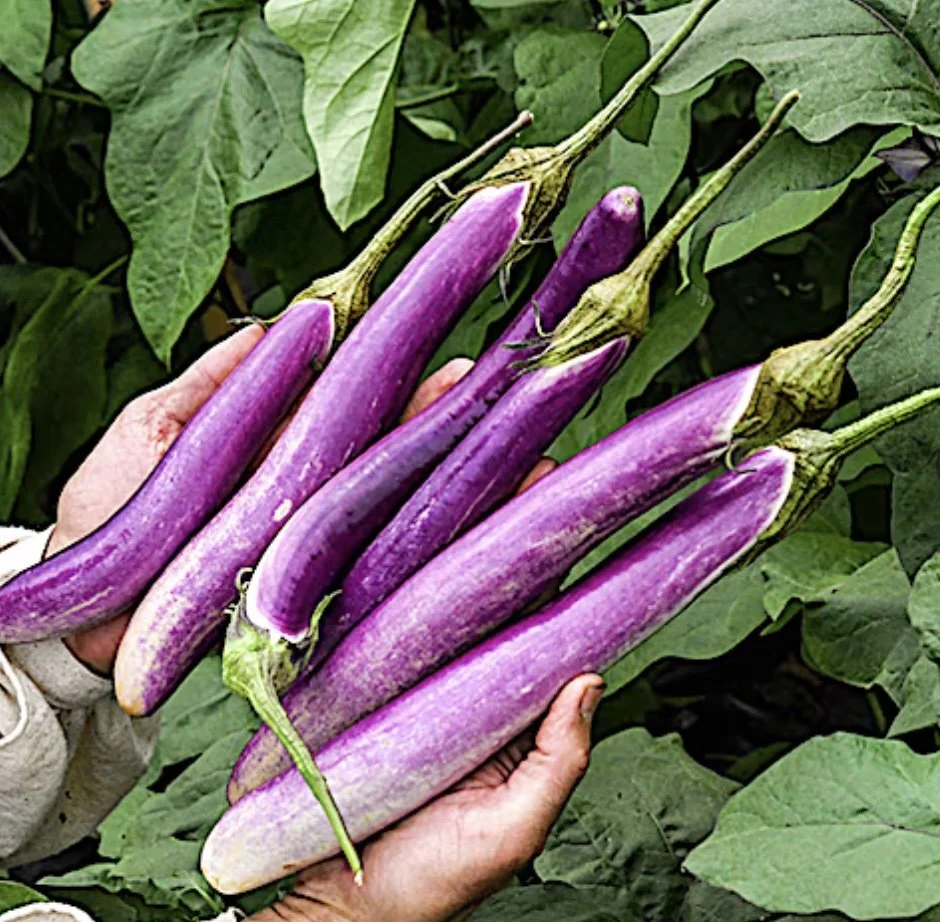
TAIWANESE EGGPLANT - Eggplant has been cultivated throughout Asia since time immemorial. This year the tropical, heat-loving Taiwanese plants on Henry’s Farm have produced a bountiful and beautiful crop here in Congerville! These eggplants have a very tender skin and wonderfully delicate taste. I usually just slice them longitudinally and then put in a pan with a little water or broth and saute until meltingly soft. Then season with soy sauce, sesame oil, or just butter and salt and enjoy! Or make a Shiso-Garlic sauce!
CUCUMBERS
ONIONS
POTATOES
BEETS or CARROTS
TOMATILLOS, TOMATOES, or SWEET CORN - Henry won’t know how much of each are ready until the morning harvest, so some CSA locations will get one of the above and others will get others. Then, he’ll switch them in the coming weeks so everyone eventually gets everything! If you aren’t familiar with Tomatillos, you can use them in a green salsa, either raw or cooked, or try the recipe below.
BASIL or SHISO — see Food Notes below.
Food Notes: Shiso and Tomatillos

You may have only encountered shiso in a Japanese restaurant, and it is of course wonderful in many Japanese dishes.
But you can also use it as you would more common herbs like basil or parsley, as a lively topping to just about any dish. I especially like it in a potato salad, egg salad, tomato salad, or fruit salad. And I would highly recommend making a Shiso + ginger + soy dipping sauce for your Taiwanese eggplant this week!
Here are a few more ideas, but you can add it to just about whatever you’re making!
~ Shiso + rice
~ Shiso + noodles or pasta
~ Shiso + cucumber
~ Shiso + tomato
~ Shiso + fish or shellfish
~ Shiso + fruit
Tomatillos
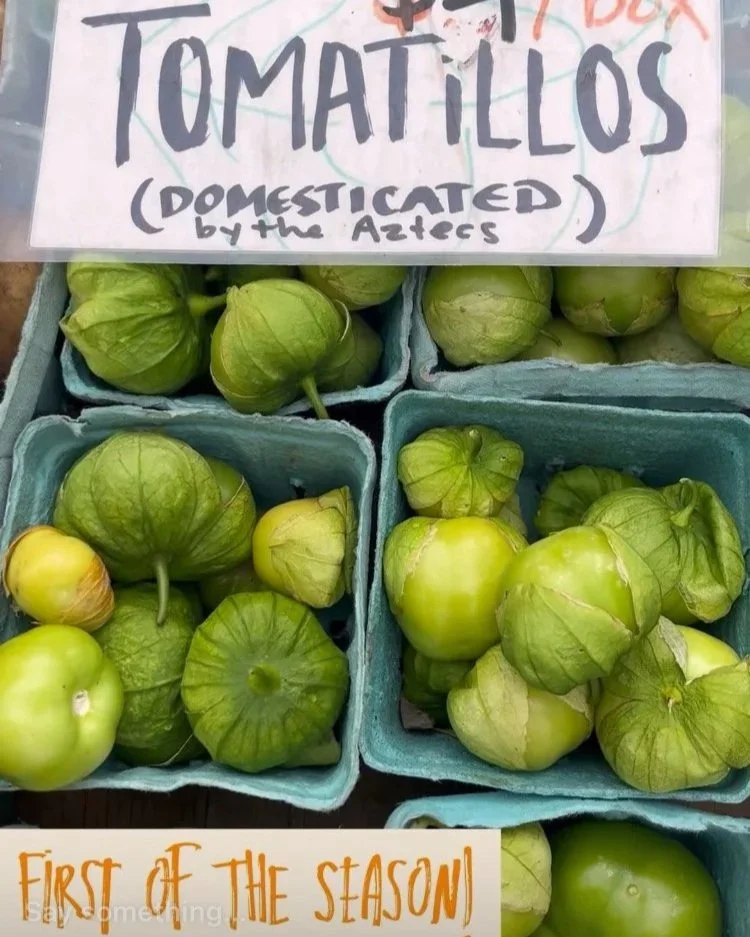
The word tomatillo means little tomato in Spanish, but it comes from the much older Nahuatl word tomatl. They were domesticated by the Aztecs around 800 BCE and have been an important crop in Central America ever since. In many regions, tomatillos grow semi-wild, due to its ability to self-sow. Even on Henry's Farm, ripe tomatillos that escape harvest drop to the ground and seed themselves.
In Mexico tomatillos are typically known as tomates verdes (“green tomatoes”), but are very different in both looks and taste from the unripe fruits of the tomato plant. Tomatillos have a thin, parchment-like husk (technically a calyx), and a bright taste, with hints of citrus, apple, and herbs, especially when raw.
Tomatillos are rich in vitamins A and C, and often used raw or roasted, in salads and salsas as well as in other Mexican and Southwestern dishes. And of course tomatillos are the key ingredient in salsa verde, which can be made with either raw or roasted tomatillos.
Rick Bayless's Roasted Tomatillo Salsa Verde con Nabitos
3 large garlic cloves, peeled
1 or 2 Anaheim or Poblano or Jalapeño chili
3/4 to 1 pound tomatillos, husked, rinsed and cut in half around the equator
1/2 cup or more diced Japanese turnip, daikon radish, or small golden beets [you could also add onions, cucumbers, and/or carrots from this week’s CSA for the "nabitos," or crunchy bits. ]
3 tablespoons fresh lime juice
1/2 teaspoon salt
2 to 3 tablespoons chopped fresh cilantro, parsley, basil, or even shiso!
Put a large nonstick skillet over medium heat. Add the garlic, chiles, and tomatillos (cut side down). When the vegetables are browned and softened on one side (about 4 minutes), turn everything over and brown the other side. Remove to a bowl and let cool.
Combine the turnip or other crunchy vegetables, lime juice, and salt in a large ziplock bag. Push out as much air as possible, seal the bag, and let the vegetables marinate for 15 to 20 minutes.
Finely chop the garlic and chiles, either by hand or with a few pulses in a food processor. Hand-chop the tomatillos into roughly ¼-inch pieces and scoop into a large bowl. Add the garlic, chiles, turnip mixture, and herbs to the bowl. Stir to combine. Taste for salt, adding a little more if necessary, and serve on tacos or grilled fish or chicken. [Also good with chips!]
