CSA #5 (6/23/26)
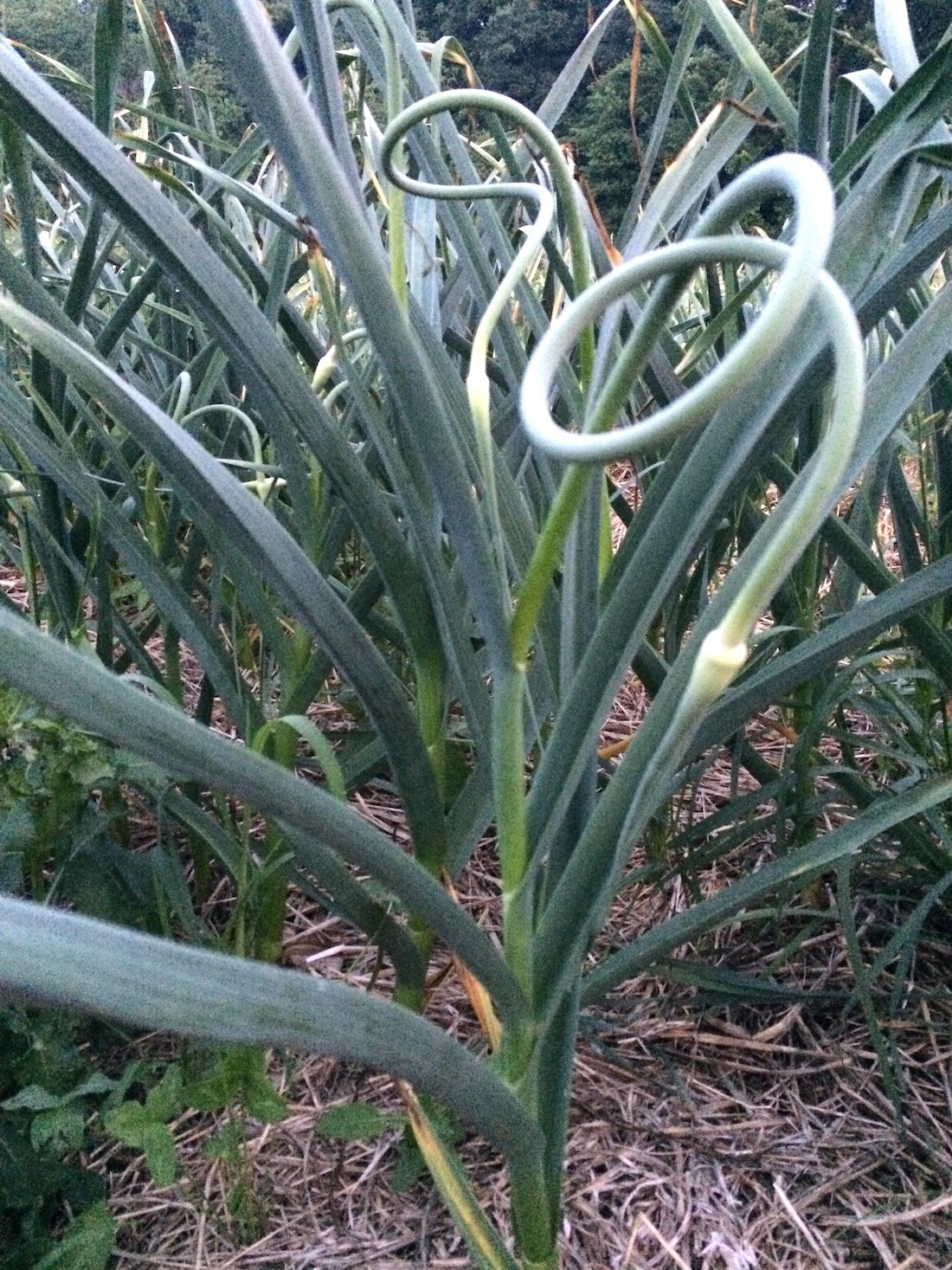
Because of the cooler weather, you get more garlic scapes, but they have a short season, and so this is most likely the last week you’ll see them!
In Your Share This Week
Garlic Scapes - Here are a few simple ways to use scapes:
sauté in butter and olive oil
add sliced scapes to any stir fry recipe
make garlic scape pesto
slice and sprinkle over any pasta
great in guacamole and fresh salsa
chop & add to softened cream cheese
saute and the add eggs and scramble them up or make an omelet
Beets
Onions
Swiss Chard — Last week I gave you a Chard Gratin recipe (which I made tonight to great acclaim, and there is not one bit left!). And this week I’ll give you Cheesy Chard Squares, another way to make chard irresistible to even those who say they hate chard!
Parsley - It’s not just a garnish! You can make a Mediterranean Parsley Salad, or a parsley pesto, or add a great big handful to the Swiss Chard Gratin recipe below. Or make a flavorful and versatile pesto to use on toast, crackers, rice, or pasta.
Plus you will get 2 of these 4 vegetables: Broccoli, Kale, Cabbage, Kohlrabi
Food Notes: Cheesy Chard Squares
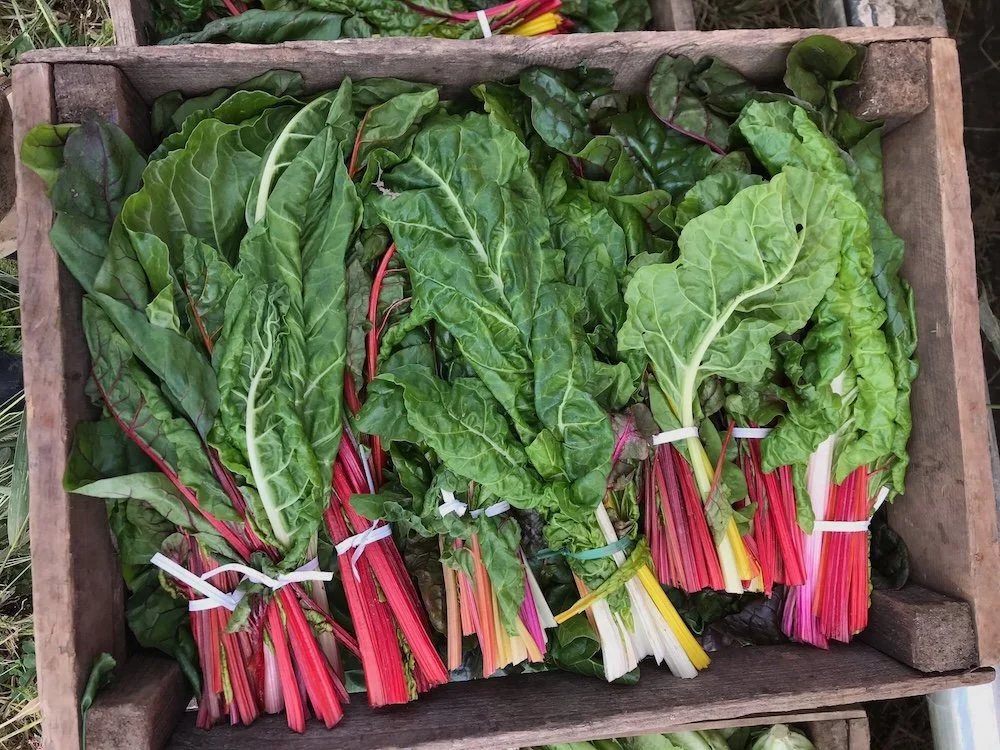
CHARD comes in all colors, and you may get a bunch of the classic green chard with white stems, or a bunch of rainbow chard like those above. All taste pretty much the same, and can be used in any recipe calling for chard.
Chard is a mildly sweet and clean-tasting green -- not at all bitter as so many people on the internet copy and repeat!
It is also the perfect substitute for spinach, now that the hot weather has ended our spinach season (until late fall).
One of our favorite family recipes is "Spinach Squares," a mixture of cooked rice, cooked spinach, and cheese -- all pressed into a baking dish and heated up. Here's a version that substitutes chard for the spinach, and incorporates garlic scapes for added flavor and nutrition. You can also add a couple of sauteed onions. Cheesy chard squares are especially good as leftovers -- for breakfast, lunch, or a snack any time!
Cheesy Chard Squares
6 ounces uncooked rice, cooked according to package directions
1/4 cup butter, melted
1/4 cup chopped garlic scapes
1 big bunch of Henry's chard, both stems and leaves, cut into 2-inch lengths and boiled in salted water for about 5 minutes, then drained and squeezed
1 to 2 cups shredded cheese -- use your favorite, or whatever's in your fridge
3/4 teaspoon dry mustard or cumin powder (optional)
1/2 teaspoon salt
Cook rice according to package instructions. While rice is cooking, preheat the oven to 350 degrees.
In a small pan, melt the butter and add the garlic scapes. Cook for about 5 minutes to soften.
Put garlic scapes and butter into a large bowl. Add cooked and squeezed chard, mustard or cumin, and salt. Mix to combine.
When rice is cooked, add it to the bowl with the spinach mixture. Then add the cheese and mix well. (You may reserve some cheese to put on top.)
Put into a buttered 8 x 8-inch casserole dish. Bake uncovered for about 30 minutes.
The fields are really soggy now and the crops are starting to suffer a bit, especially those in the bottomland fields. After yesterday’s rain, coming as it did after a few weeks’ worth of rains, is mostly sitting on top of the ground since nothing more can soak in, so we are hoping for a dry week or two
Happy (slightly late) Summer Solstice!
On the Summer Solstice (yesterday), the sun (sol) stands still (sistere). Or so it appears from our earthly perspective, going to its northernmost point in the sky, pausing briefly, and then beginning its slow pendulum swing back to the south.
Why does the solstice matter? Different folks will answer that question differently, but on Henry's Farm it marks the longest day, meaning the most minutes of sunlight, which means the most solar energy powerering all plant life -- vegetables and weeds alike.
For a clearer sense of what the summer solstice means to Henry, here are the first and the last 3 paragraphs of an essay he wrote many years ago, and which are still very much applicable.
. . .
I may not be a solar-powered being, but during the growing season I am definitely a solar-activated being. From the beginning of the growing season, the sun pulls me gently from bed a little earlier each morning and lays me sweetly down a bit later each night until the Summer Solstice. On that longest day of the year, I awoke at 4:15 in the morning and am not chased back home by the darkening sky until after nine in the evening.
. . .
And on this longest day of the season, I like to stop long enough to think my thanks to the sun for bringing me this far, to the plants for their self-nourishing ways by which they nourish me and all my fellow heterotrophs, and to all those who eat what I grow and thereby allow me to do what I love to do: grow Good Food, which I define as food grown in a manner that is good for me and my family, good for all who eat it, and good for the soil, air, and water that nurtures and nourishes it.
As the season flows from Summer Solstice to Autumn Equinox, each day I will race to keep up with those unraveling balls of string I set a-rolling with the planting of each seed, trying to nudge them down the paths I choose. I will sweat in the hot sun. I will surf the strong current of the river of the seasons until the autumnal equinox when night finally overcomes light, and when I will once again pull my bark upon the bank to catch my breath.
But for tonight, at least, as dusk’s shadows draw down on the longest day of a long season, I can sigh a little sigh of relief that tomorrow the sun will let me lie in bed in the morn a minute longer and send me to bed at night a minute sooner.
